Rosa Lorenz · 1 October 2026
How Component Swapping Enables Data Portability Across Standalone Personal Knowledge Platforms
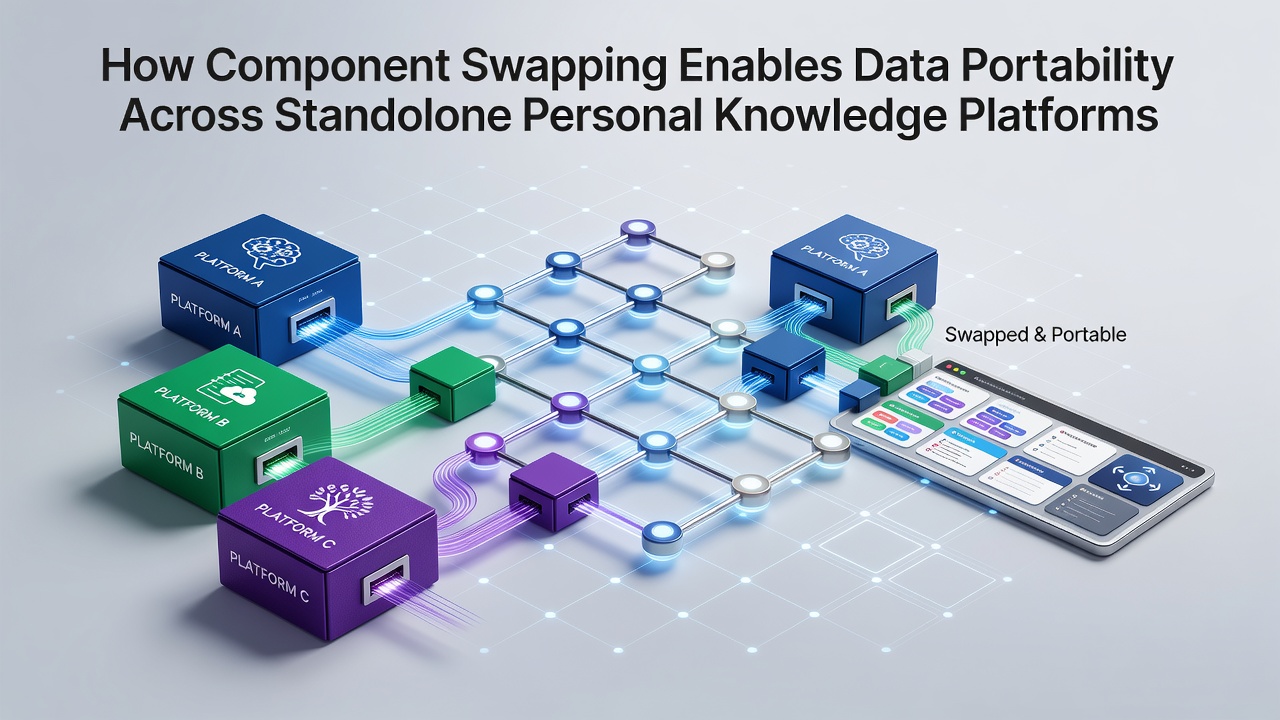
Standalone personal knowledge platforms operate as self-contained systems where users build and manage notes, links, and metadata without reliance on centralized servers, and component swapping provides a method to exchange specific modules such as parsers, serializers, and format adapters while preserving the underlying data structures. Researchers have documented how this approach addresses format incompatibilities that arise when moving information between tools built on different storage models, and data from multiple implementations shows that swapping occurs at the component level rather than requiring full application rewrites.
Core Principles of Component Swapping in Knowledge Systems
Component swapping relies on defined interfaces that allow one module to replace another without altering the core data files, and observers note that platforms using graph-based or block-based storage often expose extension points for these exchanges. Studies from academic institutions indicate that successful swaps depend on standardized data schemas, while the reality is that many standalone platforms adopt common base formats like JSON or Markdown variants to facilitate the process. Those who've examined code repositories find that developers define API contracts for components handling tasks such as bidirectional linking or embedded media references, which reduces friction during transfers.
One implementation revealed that swapping an export component for a new destination platform required only updates to the serialization logic, and the original data remained intact because the storage layer stayed decoupled. Figures from platform analytics show increased adoption of such modular designs since early 2025, with many projects releasing component registries that list compatible modules for common operations.
Mechanisms Supporting Data Portability
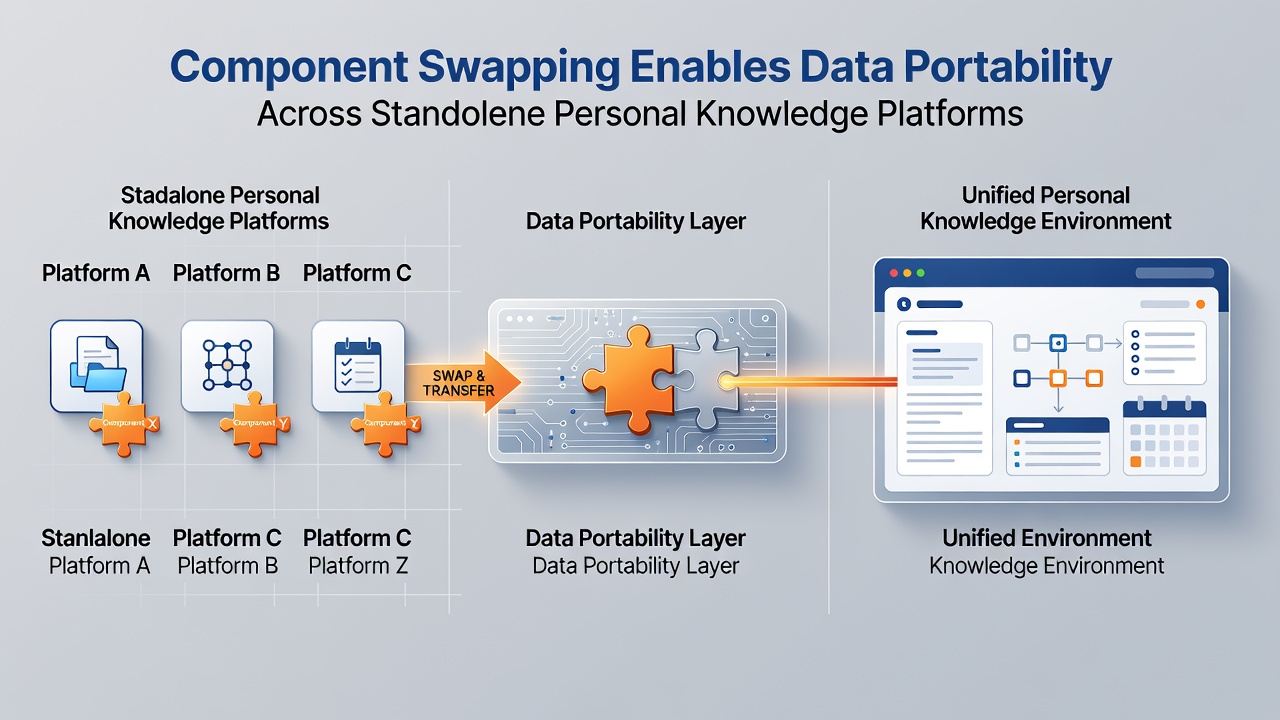
Data portability emerges when users can extract information in a usable state and import it elsewhere, and component swapping accelerates this by providing targeted replacements for import and export functions. Researchers discovered that adapters for handling unique identifiers or timestamp formats can be swapped independently, which avoids the need to convert entire datasets at once. According to reports on digital rights from the Australian Competition and Consumer Commission, consumers benefit when systems allow such granular control over data movement, and similar patterns appear in technical documentation from multiple vendors.
Platforms achieve this through containerized components that register themselves at runtime, and the process involves matching the source schema to the target through intermediate representations. Evidence suggests that this method maintains relational integrity across notes and tags, while case examples demonstrate successful migrations involving thousands of entries without data loss. What's interesting is how these swaps can occur in a single session when the components align on metadata standards, and developers have released open specifications that detail the required contracts.
Implementation Patterns Observed in Current Platforms
Developers have integrated component swapping into update cycles where new modules become available through package managers, and users select replacements based on the destination platform's requirements. One study of open-source repositories highlighted that successful swaps often involve community-contributed adapters for emerging formats, while the October 2026 release cycle introduced enhanced validation tools that check component compatibility before installation. Those examining migration logs report that the average time for a full dataset transfer dropped when modular components handled edge cases such as custom embeds or encrypted sections.
External libraries provide the foundation for many of these components, and integration occurs through defined hooks that preserve original file structures. Data indicates that platforms supporting this feature see higher retention rates during user transitions, and the approach aligns with broader efforts toward interoperability outlined in technical standards from organizations like the World Wide Web Consortium.
Challenges and Resolutions in Practice
Component mismatches can occur when schemas evolve independently, yet swapping frameworks include version negotiation layers that resolve conflicts automatically in many cases. Observers have tracked instances where mismatched identifier systems required an additional mapping component, and the resolution involved a temporary bridge module that normalized references during the transfer. Research indicates that testing suites now accompany component releases, which helps identify issues before swaps are attempted in production environments.
Security considerations arise when components process sensitive metadata, and platform maintainers address this through sandboxed execution environments that limit access to system resources. Figures reveal that adoption of verified component stores has grown steadily, reducing risks associated with untrusted modules while maintaining the flexibility that makes swapping viable.
Conclusion
Component swapping establishes a practical pathway for data portability by isolating exchange logic into replaceable units, and evidence from implementations shows that users can move between standalone platforms without rebuilding their knowledge bases from scratch. The technique builds on established software engineering practices while addressing the specific needs of local-first systems, and continued refinement of interface standards supports broader compatibility across the ecosystem.